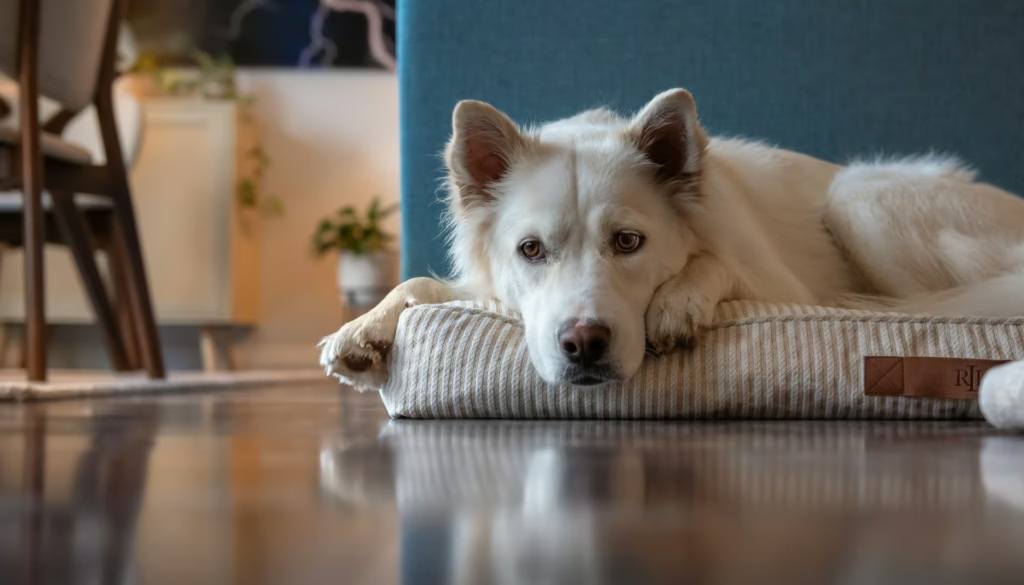
The House Goes Quiet: How Back-to-School Season Affects Your Dog (and What You Can Do)
The most common first day of school in 2026 is Monday, August 10—and for a lot of dogs, that is the day their whole social world disappears. For ten to twelve weeks, your dog had company nearly every waking hour: kids home, late nights on the couch, someone always in the kitchen. Then one Monday morning, the door closes and the house goes silent for eight hours.
Here is what most families do not realize: your dog has no idea this is coming. They cannot read a calendar, but they are exceptional at reading patterns. When the coffee maker runs, when the leash comes off the hook, who is home at 3 p.m., when dinner lands in the bowl. A dog’s sense of security is built almost entirely out of predictability, and their schedule is not really theirs. It is yours, borrowed.
When school resumes, that borrowed rhythm collapses overnight. And for many dogs, that collapse is the start of genuine distress.
Why the Back-to-School Transition Hits Dogs So Hard
All summer, your dog’s day had a rhythm: someone was almost always home, walks happened on a whim, and attention was constant. When school resumes, that rhythm collapses. Dogs are creatures of routine, and an abrupt swing from “never alone” to “alone all day” is exactly the kind of change that tips ordinary nerves into real distress.
Dr. Amy Pike, a board-certified veterinary behaviorist, explains that the biggest mistake families make is assuming the dog will simply adjust. “Ideally, we should prepare them well in advance of a major transition,” Pike says. “We need to get them back on the school routine schedule, which includes an earlier wake-up time and more time spent home alone.”
Here is the part that surprises many owners: most dogs actually thrive on structure. “Most dogs really thrive off of structure and predictability, and the school year is often much more structured and routine than the summers,” Pike notes. The dogs who struggle are the ones with low resilience to change, and those with existing separation-related behavior.
A 2026 qualitative study published in Scientific Reports identified “changes to routine and environment” as one of six central themes in separation-related problems. Researchers interviewed veterinarians, animal behaviorists, and dog trainers across Denmark, Sweden, and Norway. Their findings described how major disruptions—like the sudden shift from summer to school-year schedules—can trigger separation-related problems by undermining a dog’s sense of safety and stability.
The Numbers: How Common Is This, Really?
The honest answer is that the numbers vary, and it is worth understanding why.
Bloomberg Intelligence’s US Pet 2026 Survey found that anxiety was the most commonly reported condition affecting pets, identified by 19.6% of respondents. That is nearly one in five pet owners saying their animal struggles with anxiety.
For dogs specifically, the range is wide depending on how you measure. Veterinary references put the clinical prevalence of separation-related problems somewhere in the 13–28% range, while broader owner surveys run higher—roughly a third of pet parents believe their own dog struggles when left behind. Among the youngest dogs, nearly 47% of puppies show separation-related behaviors by six months of age.
In the Dog Aging Project’s data on more than 50,000 dogs, separation-related behavior ranks as the single most commonly reported behavior category by owners. And Bark Busters’ 2026 National Dog Behavior Analysis, which reviewed nearly 50,000 in-home training inquiries, placed separation anxiety among the top concerns families report nationwide.
A new Texas A&M study of 43,000 dogs found that 84% show some anxiety signs—and the August back-to-school schedule swing is one of the biggest triggers of the year.
Is It Really Separation Anxiety? How to Read the Signs
Before you build a plan, get clear on what you are actually seeing. Not every chewed shoe is anxiety—sometimes it is boredom. True separation anxiety shows up specifically around your absence.
Before you build a plan, get clear on what you are actually seeing. Not every chewed shoe is anxiety—sometimes it is boredom. True separation anxiety shows up specifically around your absence.
The American Kennel Club lists the classic signs:
-
Pacing, whining, or trembling
-
Excessive barking or howling when alone
-
Destructive chewing near doors and windows
-
Indoor accidents in an otherwise house-trained dog
-
Drooling, panting, and frantic escape attempts
Here is the distinction that matters: what most people call “separation anxiety” is a spectrum. On one end is a dog who is mildly bored and out of routine. On the other is a genuine panic disorder—and panic is not something a dog can be corrected out of.
A landmark study of more than 2,700 dogs led by behavior researcher Daniel Mills at the University of Lincoln found that “separation anxiety” is not a single diagnosis at all. It is an umbrella for several different frustrations. Some dogs are desperate to escape something inside the home, others are straining to reach something outside, some react to noises while alone, and some are simply bored.
That matters because the fix depends on which frustration you are actually dealing with.
A Practical Plan: The Three-Week Reset
The good news is that fall separation anxiety is one of the most fixable behavior problems out there. You do not need a miracle—you need a plan.
Week 1: Rebuild the Routine
Start with meal times. Lock them in first. Dogs anchor their day around food, and consistent meal times send a powerful signal that the household rhythm is predictable, even if the people are not around as much.
Shift wake-up times gradually. If the summer had everyone sleeping until 9 a.m. and school means 6:30 a.m., do not make that jump in one night. Move it back by 15 minutes every couple of days.
Practice short absences. Leave the house for 5 minutes, then 10, then 20. Do this before the first day of school, not after.
Week 2: Build Alone-Time Confidence
Create a calm departure ritual. A specific cue, then a puzzle toy, then a calm goodbye tells your dog exactly what is coming. The key word is calm. Leave the house calm, not chaotic. Keeping goodbyes short and sweet helps your pet stay calm.
Tire them out in the morning. A walk, a game of fetch, or a laser-pointer chase can help your pet nap while the house is quiet.
Do not make departures a big deal. If you make a fuss when you leave and a bigger fuss when you return, you are teaching your dog that being alone is something to worry about.
Week 3: Maintain and Monitor
Keep the routine consistent. Dogs cope beautifully with predictable patterns and poorly with several of them changing in the same week.
Watch for the line between adjustment and alarm. A dog who is a little off for a few days is adjusting. But if you are seeing panic rather than pouting—a dog who injures themselves trying to escape, vocalizes for hours on end, or will not eat when alone—that is clinical separation anxiety. Real separation anxiety responds to proper treatment plans, sometimes including medication, and no amount of frozen Kongs fixes it alone.
If you are seeing those signs, talk to your veterinarian. There are effective treatments, including behavior modification, environmental changes, and in some cases, medication. Trazodone, for example, is one of the most commonly prescribed anxiety medications for dogs and works best combined with behavior modification and environmental changes for separation anxiety.
One More Thing: Your Dog Is Not Being Dramatic
The pandemic left a long tail here. An estimated 23 million U.S. households added a pet during lockdowns, and many of those dogs have literally never spent a normal weekday alone. Add the puppies and rescues adopted over summer break—surrounded by people for weeks—and September becomes their first real taste of an empty house.
If your dog is struggling, they are not being dramatic, and they are not punishing you for going back to work. They are responding to a genuine change in their world, and they need your help to adapt.
Ready to help your dog thrive through every season? Join the MasPet Pack and get practical, vet-informed pet guidance delivered to your inbox every week.
The information provided is for informational and educational purposes only. While every effort has been made to ensure accuracy and usefulness, it does not replace the advice, diagnosis, or treatment of a professional veterinarian. The reader assumes full responsibility for the use of this information. MasPet assumes no liability for errors, omissions, or decisions made based on the content presented.